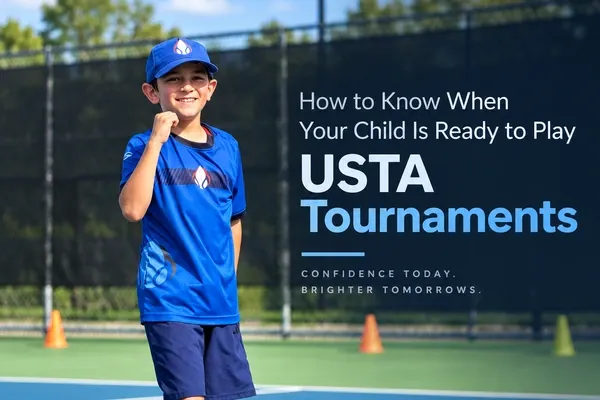
USTA Junior Tournaments: Is Your Child Ready?
USTA junior tournaments, junior tennis development, tournament readiness, junior tennis Katy TX, tennis academy Katy Texas
How to Know When Your Child Is Ready to Play USTA Tournaments
For many tennis families, entering that first USTA junior tournament feels like a major milestone. It is exciting, but it also raises an important question: how do you know when your child is truly ready to compete, not just rally or take lessons? At ZENNIQ Academy in Katy, Texas, we view tournament readiness as a developmental decision, not simply a matter of age, power, or how long a player has been on the court.
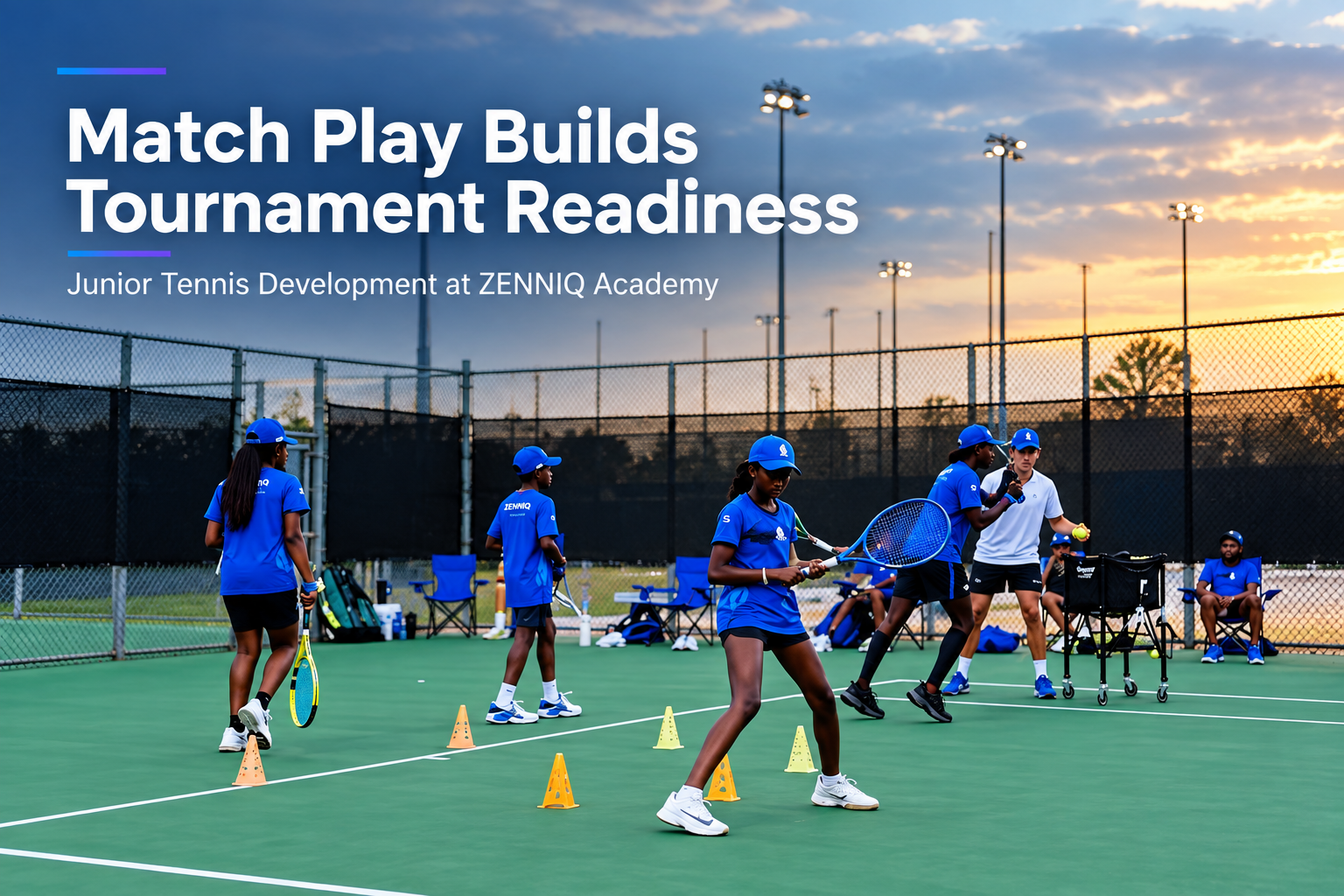
Tournament Readiness Is More Than Age or Power
Parents often ask whether their child is “too young” or “too small” for USTA junior tournaments. Others wonder if hitting the ball hard is enough to start competing. In reality, readiness is a combination of technical skills, movement, scoring knowledge, emotional control, independence, tactical understanding, and physical preparation. A player who checks these boxes will enjoy a healthier, more productive introduction to competition—regardless of age group or ranking goals.
Signs Your Junior Player May Be Ready for Tournament Competition
1. Solid Basic Technique and Rally Tolerance
A tournament-ready junior does not need perfect strokes, but they should be able to rally with control from the baseline, use both forehand and backhand, and keep the ball in play for several shots under moderate pressure. Consistent contact, reasonable depth, and basic directional control are more important than raw power at this stage.
2. The Difference Between Rallying and Competing
Many juniors can rally well in practice but struggle the moment the score starts. Competing means:
Playing points from serve and return, not just cooperative rallies
Making decisions under pressure instead of just “hitting back”
Handling momentum swings and staying engaged after losing points
If your child can adjust from cooperative drills to competitive points and still execute their skills, that is a strong sign of tournament readiness.
3. Understanding Scoring, Serving Order, and Match Procedures
Before entering USTA junior tournaments in Katy, Greater Houston, or anywhere else, players should comfortably know:
Basic scoring (points, games, sets, tiebreaks)
Who serves first and how serving order rotates in singles and doubles
When to change sides and how changeovers work (every odd game)
How to call lines fairly and resolve disagreements respectfully
A player who constantly looks to a parent or coach for scoring help is not yet ready to manage a match independently—an essential requirement in USTA competition.
4. Serving Consistently and Starting Points Independently
Serving is often the biggest gap between lesson play and tournament play. A tournament-ready junior should be able to:
Make a reasonable percentage of first serves in the correct box
Use a reliable second serve without double-faulting excessively
Begin points independently—no feeding from coaches, no re-dos
When players can start and finish games on their own, they are ready to handle the structure of USTA matches in a tournament setting.
5. Movement, Balance, Recovery, and Court Positioning
In competition, players rarely get “perfect” balls. Good tournament candidates can:
Move efficiently to the ball and stay balanced while hitting
Recover back to a neutral or aggressive court position after each shot
Adjust their position based on opponent’s contact (step in, back, or sideways)
Poor movement and recovery lead to rushed shots, errors, and frustration. At ZENNIQ Academy, we place strong emphasis on footwork and biomechanics so that players can physically support their tactical intentions in matches.
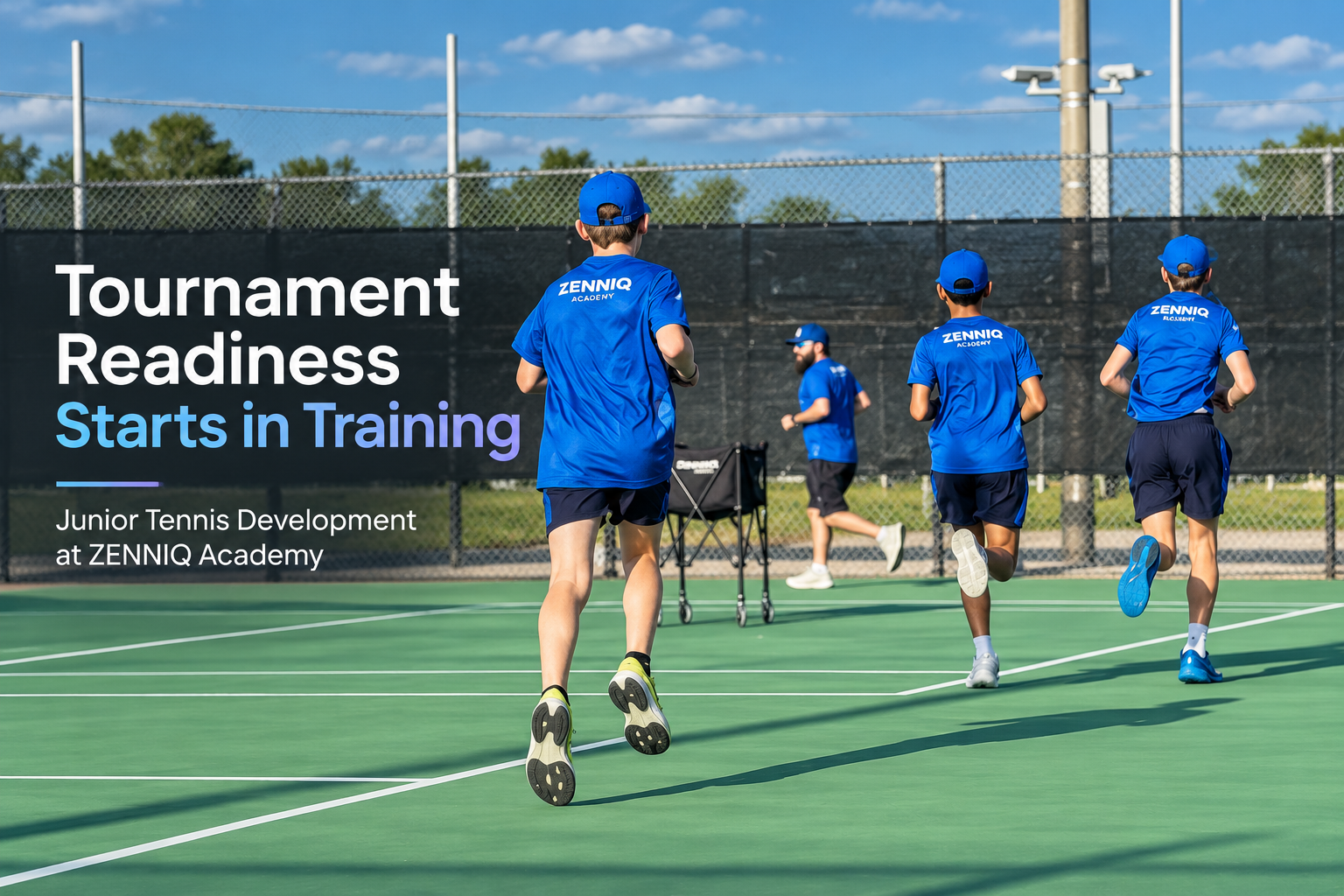
Efficient movement and recovery often separate strong competitors from good practice hitters.
6. Constructing Points, Not Just Hitting Balls
Tournament tennis is about solving problems, not just making contact. A ready junior should begin to:
Aim to specific targets (crosscourt, down the line, deep middle)
Use height, spin, and direction to move opponents and create space
Recognize weaker sides or patterns and build points around them
This does not need to be advanced strategy, but the player should show an understanding that each shot has a purpose in the point. ZENNIQ Academy integrates tactical development into daily training so players learn to think as well as hit.
How Competition Changes Concentration and Decision-Making
Once a score is kept, everything feels different. Even confident practice players can tighten up, rush, or freeze during real matches. True tournament readiness includes the ability to:
Maintain focus between points and during longer rallies
Make simple, high-percentage decisions under pressure (e.g., “one more ball deep crosscourt”)
Stick to a basic match plan instead of reacting emotionally to each point
This is where mental performance training becomes essential. At ZENNIQ Academy, we coach juniors to use routines, breathing, and clear tactical cues to manage nerves and make smarter choices on important points.
Handling Mistakes, Frustration, and Momentum Shifts
Every junior, regardless of level, will miss shots, lose games, and experience momentum swings. Tournament-ready players are not perfect; they are resilient. Look for signs that your child can:
Accept errors without throwing racquets, yelling, or quitting on points
Reset between points using a simple routine (breathe, adjust strings, refocus)
Keep competing even when behind, instead of giving away games
Learning to handle frustration and momentum is part of development. Coaches and parents should treat emotional control as a skill to train, not a personality flaw to criticize.
Why Match Play in Training Is Essential Before Tournaments
Before entering USTA junior tournaments, players should experience structured match play in a training environment. At ZENNIQ Academy, we regularly include:
Practice sets with full scoring and changeovers
Scenario-based games (e.g., serving at 30–40, tiebreak simulations)
In-house match days and practice tournaments
This bridge between lessons and official tournaments helps juniors learn procedures, routines, and emotional management before facing unfamiliar opponents in Katy, Houston, or regional events.
Practice Skills vs. Match Skills
It is common for juniors to look excellent in drills but struggle in competition. Practice often provides predictable feeds, no score, and low emotional pressure. Matches demand:
Decision-Making and Patience
In drills, the decision is made for the player: hit crosscourt, hit ten balls, etc. In matches, they must choose when to attack, when to defend, and when to build. Many young players try to end points too quickly, leading to unforced errors. Developing patience—“one more solid ball”—is a key match skill we emphasize at ZENNIQ Academy.
Positioning and Recovery Under Pressure
In lessons, balls often come to the same spot. In matches, opponents change direction and height. Players must constantly adjust their court position, recover after each shot, and avoid getting stuck near the doubles alley or too far behind the baseline. This is why footwork, balance, and recovery patterns are central to high-performance development at our academy.
Mental Control and Tactical Execution
Some players can execute a pattern in drills (“two crosscourt, one down the line”) but abandon it in matches when nervous. Match skills include:
Sticking to a simple plan even after losing a point
Using routines to reset emotionally between points and games
Accepting that “ugly wins” built on consistency are still wins
At ZENNIQ Academy, we design training blocks that specifically target this gap between practice skills and match skills, helping juniors in Katy and Greater Houston translate their hard work into competitive performance.
Tournament Readiness Checklist for Junior Tennis Players
Use this practical checklist to discuss readiness with your child and coach. A player does not need a perfect “yes” on every item, but consistent strengths across these areas suggest they are prepared for entry-level USTA junior tournaments.
Serve Consistency: Can make a reasonable percentage of first serves and a dependable second serve in both boxes.
Return of Serve: Can put most second serves back in play with control and start the point neutrally or slightly offensively.
Rally Tolerance: Can sustain 4–6 ball rallies from the baseline against similar-level players without rushing or panicking.
Scoring Knowledge: Understands point, game, set scoring, tiebreak basics, and can keep score out loud without help.
Court Positioning: Recovers to appropriate positions after shots and does not drift aimlessly around the baseline or net.
Movement and Recovery: Shows balanced footwork, can change direction safely, and recovers after wide balls instead of watching.
Basic Point Construction: Tries to play to targets, use crosscourt as a base pattern, and build instead of going for low-percentage winners every shot.
Match Etiquette: Greets opponents respectfully, knows when to change sides, and behaves professionally on court.
Line Calls: Makes honest calls, gives benefit of the doubt, and can calmly resolve disagreements or call for an official if needed.
Emotional Control: Shows frustration at times but does not melt down, quit, or disrespect opponents, officials, or themselves.
Independence on Court: Can manage score, water, equipment, and simple issues without constant guidance from parents or coaches.
Physical Readiness: Has the stamina to complete at least one full match (and ideally two) in a day without excessive fatigue or risk.
Able to Follow a Match Plan: Can remember and attempt 1–3 simple tactical goals agreed with the coach before the match.
How Parents Can Support Without Adding Pressure
Parents play a crucial role in how children experience their first USTA tournaments. Helpful support includes:
Emphasizing effort, learning, and sportsmanship over winning or rankings
Keeping pre-match messages simple and positive (“Compete hard, stay respectful, enjoy it”)
Allowing the coach to handle technical and tactical feedback, especially right after matches
💡 Key Guidance for Parents: Your child should feel that your love and support are not dependent on the match result. This mindset encourages healthier long-term development in competitive junior tennis.
Common Mistakes When Entering Tournaments Too Early
Families in Katy and Greater Houston are surrounded by many tournament options, which is positive—but it can also lead to rushing into competition. Frequent mistakes include:
Entering events before the child can serve or keep score independently
Playing multiple tournaments each month with little structured training between them
Choosing events with opponents far above the child’s developmental level, leading to repeated 6–0, 6–0 losses and discouragement
A thoughtful progression—starting with entry-level USTA junior tournaments and local match play—creates a more positive competitive experience and supports long-term growth.
Why Losing Early Tournaments Does Not Mean Your Child Was Not Ready
Early losses are a normal part of competitive tennis. Even well-prepared juniors may lose their first few tournaments as they adjust to:
New environments and unfamiliar opponents
Longer matches and different playing styles
Managing nerves with officials, parents, and peers watching
The key question is not “did they win?” but “did they compete, learn, and show resilience?” If the answer is yes, then the tournament was a valuable step in their development, even if the score was lopsided.
How Coaches Evaluate Developmental Readiness for Competition
At ZENNIQ Academy, tournament decisions are made collaboratively between coach, player, and family. Our evaluations consider:
Technical stability under pressure (forehand, backhand, serve, return, volleys)
Movement quality, balance, and physical readiness for tournament loads
Understanding of scoring, rules, and basic tactics appropriate to age and level
Emotional maturity, capacity to handle adversity, and willingness to learn from matches
Our individualized evaluations help parents in Katy, Texas and surrounding areas make informed decisions about when and how to introduce USTA junior tournaments into their child’s development plan.
Integrating Tournament Experience into a Long-Term Development Plan
Tournament play should support, not replace, structured training. At ZENNIQ Academy, tournament scheduling is integrated into each player’s long-term development pathway:
Early stage: Occasional entry-level events to gain experience and learn procedures
Development stage: Regular tournaments combined with targeted technical correction, footwork training, and mental performance work based on match feedback
High-performance stage: Carefully periodized tournament schedules, including sectional and national events, aligned with training blocks and recovery periods
This structured approach ensures that each tournament—win or lose—feeds back into a clear plan for improvement in technical, tactical, physical, and mental areas.
ZENNIQ Academy’s Player-Development Philosophy in Katy, Texas
ZENNIQ Academy serves junior players and families from Katy, Greater Houston, and surrounding communities who are serious about competitive junior tennis. Our philosophy is built on:
Structured Training: Planned sessions that balance technical work, footwork, match play, and physical conditioning.
Technical Correction and Biomechanics: Efficient stroke mechanics that hold up under match pressure and reduce injury risk.
Tactical Development: Teaching players how to construct points, adapt to opponents, and understand percentage tennis.
Mental Performance: Building routines, focus, emotional control, and resilience for competitive situations.
Match Play and Tournament Preparation: Regular practice matches, video review, and pre-tournament planning to ensure players know what to expect.
High-Performance Development: For committed juniors, tailored pathways that may include regional, national, and collegiate tennis goals.
Every player begins with an individualized evaluation so that tournament decisions and training plans are based on their current development, not just their age group.
FAQ: Junior Tournament Readiness and USTA Competition
What age should my child start USTA junior tournaments?
There is no universal “right age.” Many players begin entry-level events between 8 and 12, but readiness depends more on skills, independence, and emotional maturity than birth year. A younger player who meets the readiness checklist may be more prepared than an older player who does not yet serve, keep score, or manage frustration effectively.
What are the clearest signs my child is ready to compete?
Key indicators include: consistent serve and return, basic scoring knowledge, ability to rally with peers, independence on court, emotional control, and interest in competition. If your child asks to play tournaments and demonstrates these skills in practice matches, it is a strong sign they are ready for entry-level USTA events.
How important are practice matches before real tournaments?
Practice matches are essential. They allow players to learn scoring, routines, and emotional management in a controlled environment. At ZENNIQ Academy, we treat practice matches as a core part of junior tennis development, especially before a player’s first USTA tournament in Katy or Houston.
Does my child need to know all the USTA rules before playing?
They do not need to memorize the full rulebook, but they should understand scoring, serving order, changeovers, basic code of conduct, and how to make line calls. Coaches can fill in details over time, but players must be able to manage a match without constant adult intervention.
How often should my child play tournaments?
Frequency depends on age, goals, and training volume. For many developing juniors, one tournament every 4–6 weeks works well, leaving time to train, correct issues, and recover. High-performance players may compete more frequently during certain periods, but tournament schedules should always be balanced with structured training and rest.
What should we do after a tough loss in a tournament?
Immediately after the match, focus on support and perspective: acknowledge effort, thank the opponent, and cool down. Later, review the match with your child’s coach to identify 2–3 learning points. At ZENNIQ Academy, we use losses as information—guiding future technical work, tactical focus, and mental training.
Professional Next Step: Schedule a Player Evaluation with ZENNIQ Academy
If you are a parent in Katy, Texas, Greater Houston, or nearby communities and you are wondering whether your child is ready for USTA junior tournaments, a professional evaluation can provide clarity and direction. ZENNIQ Academy offers structured assessments that review technical skills, movement, scoring knowledge, emotional readiness, and match-play habits.
Based on this evaluation, we outline a clear development plan—including training priorities, recommended tournament levels, and how to use competition as a positive, long-term growth tool. Whether your child is just starting junior tennis or aiming for high-performance pathways, our goal is to help them compete with confidence, character, and a love for the game.
To learn more about junior tennis development, tournament readiness, and high-performance training in Katy, Texas, contact ZENNIQ Academy to schedule a player evaluation and discuss the best competitive pathway for your child.